HONS 255.03 | Fall 2021 | MYBK 320 | T/TH 10:50 – 12:05

Photo Credit: Larissa Honsek
What is the self, and how has it been defined historically? And how do we conceive of the self in the today, and as we look to the digital future? How is the self written, pictured, mythologized, transformed, and virtualized? This course will address these enduring questions, using the practice of contemporary autobiography as our focus.
We will begin with a section on “investigations and methods” where we will examine ideas of selfhood across time and from different disciplinary perspectives and explore methodologies unique to the interdisciplinary field of autobiography and life-writing studies. The course will then proceed to a section on “models” where we read and discuss and write about a set of autobiographies with these investigations and methods in mind. The course will conclude with a final section focusing on “making” in which students will engage in a major research project in relation to autobiography.
Student Learning Outcomes (SLOs)
General Education SLOs for Humanities:
- Students analyze how ideas are represented, interpreted or valued in various expressions of human culture.
- Students examine relevant primary source materials as understood by the humanities area under study and interpret the material in writing assignments.
These learning outcomes will be evaluated using the take-home mid-term exam.
Honors SLOs for Colloquia Exploring Complexity and Diversity require that students:
- Demonstrate the ability to create and communicate analytic arguments supported by evidence (Reinforced)
- Evaluate complex issues using an interdisciplinary perspective (Introduced, Reinforced, & Demonstrated)
- Analyze and synthesize information within and/or across disciplines (Reinforced)
Course-specific SLOs:
- Students demonstrate a comprehensive understanding of the historical and theoretical context for autobiography
- Students apply key concepts related to autobiography to analyze contemporary autobiographical texts
- Students synthesize knowledge from interdisciplinary research in support of creative and/or critical autobiography-focused projects
Prerequisites
For students entering the Honors College under the new curriculum in Fall 2018, this course may count towards one of two required Exploring Complexity and Diversity Colloquia courses. In order to enroll, you must successfully complete an Honors Foundation course in Fall 2018.
Required Course Materials
You can purchase these book independently or through the College Bookstore
~ 2010 ~ |
~ 2018 ~ |

~ 2019 ~ |

~ 2019 ~ |

~ 2021 ~ |
~ 2019 ~ |
|
~ 2017 ~ |
~ 2021 ~
|
|


Book list, with links:
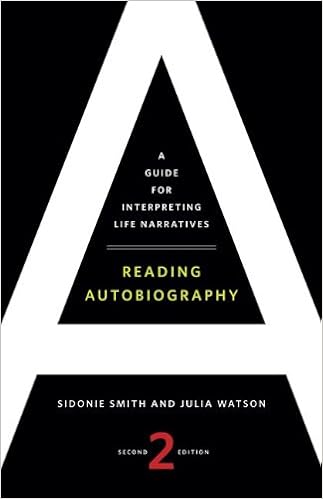
Reading Autobiography: A Guide for Interpreting Life Narratives, Second Edition (2011), by Sidonie Smith and Julia Watson
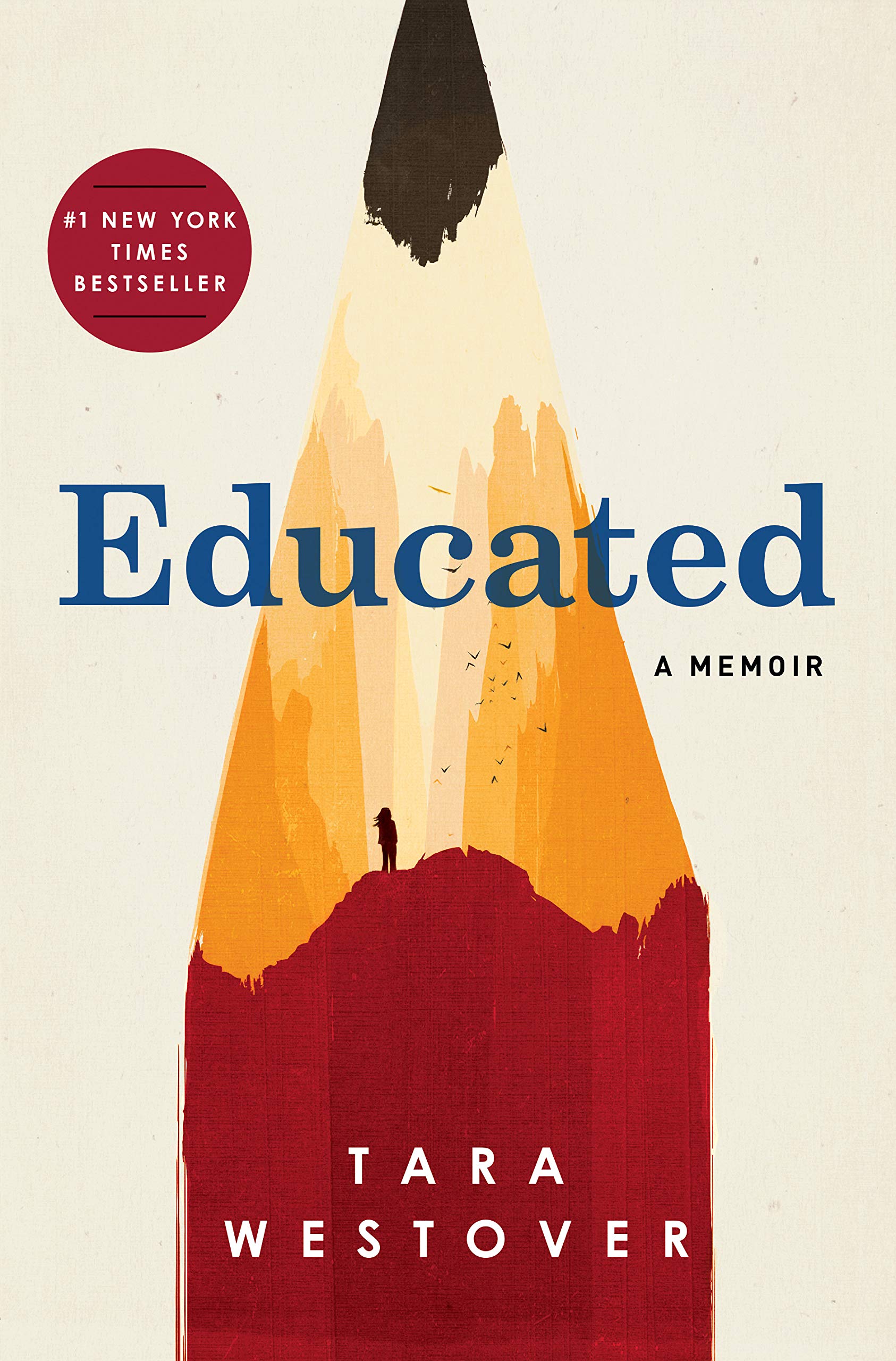
Educated: A Memoir (2018), by Tara Westover
The Book of Delights (2019), by Ross Gay
In the Dream House (2019), by Carmen Maria Machado (2019)
The Undocumented Americans (2021), by Karla Cornejo Villavicencio
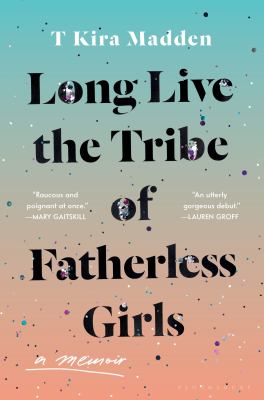
Long Live the Tribe of Fatherless Girls (2019), by T Kira Madden
The Fact of a Body: A Murder and a Memoir (2017), by Alexandria Marzano-Lesnevich
Punch Me Up to the Gods (2021), by Brian Broome
Schedule
Notes:
- Although not noted individually on the schedule, there will be daily informal reflective engagement exercises related to the readings due that day. These reflective engagements will inform our class discussion on any given day and also form the core of your participation grade in the course.
- Blog prompts will always be posted on the relevant assignment tab on the last day of discussion for any given book, and posts are deadlines (generally a few days after we wrap up discussion) are noted in the schedule below. You are only required to complete 6 of the 7 blog post opportunities.
WEEK 1_______________________________
Tuesday 8/24
- Course Introduction: What is the Self?
- Humans of New York 1
- Humans of New York 2
- Humans of New York 3
- Humans of New York 4
- Opening Prompt: What is a “self.” Do we have some kind of deeper identity that exists beyond the intersection of various traits and attributes: our citizenship status, our culture, our class, our various attributes of identity (gender, sexuality, race), our body, our beliefs, our familial, social, and institutional roles? We see in the above stories how a stable sense of self is so easily displaced and challenged, but also supported and endorsed. Write a brief sketch of yourself in a moment–or as a recasting of a memory–where we get the sense of a self being formed or deformed, supported or challenged, in a way that could be momentous but might also be quite mundane. What does your sketch say about the “self”–its provisional quality, its stability, its mutability, its power?
Thursday 8/26
- Reading Autobiography (1-62)
- “Against Catharsis,” T Kira Madden
- Reflective Engagement 1: During class, I will divide you into six small groups, each of which will be responsible for tackling one concept from Chapter 2 of Reading Autobiography—“Autobiographical Subjects.”For one of these concepts—memory, experience, identity, space, embodiment, or agency—please do the following:
- Define the term and distill what you take to be the over-arching and most important point in relation to a specific quote.
- Briefly discuss the various facets the concept that the authors break down for us.
- Identify what you took to be the most confusing moment in that section and introduce it to the class as a problem for us all to consider.
- If you can, relate some part of the theoretical conversation back to Madden’s essay.
Each group will lead a mini-discussion of each concept for the class.
WEEK 2_______________________________
Tuesday 8/31
- Reading Autobiography (63 – 125)
- “Against Catharsis,” T Kira Madden
- Reflective Engagement 2: During class, I will divide you into small groups, each of which will be responsible for tackling one concept from Chapter 3 of Reading Autobiography—“Autobiographical Acts.”For your assigned concept, please do the following:
- Define the term and distill what you take to be the over-arching and most important point in relation to a specific quote.
- Briefly discuss the various facets the concept that the authors break down for us.
- Identify what you took to be the most confusing moment in that section and introduce it to the class as a problem for us all to consider.
Each group will lead a mini-discussion of each concept for the class.
Thursday 9/2
- Reading Autobiography (127-191)
- Excerpt from Know Thyself, by Stephen M Fleming
- Please also re-read Madden’s essay linked in the schedule above as we will spend a good deal of time discussing it in relation to core concepts from Reading Autobiography.
- Reflective Engagement 3: We have assembled a significant set of concepts and ideas related to what constitutes the “self” at any given moment in history, and how the “self” emerges in the many genres that constitute autobiography. Your first blog post will ask you to begin applying these tools to Madden’s essay “Against Catharsis.” But we are going to get started on that work in class today. Please select (at least) 1 concept each from Chapter 2 (“Autobiographical Subjects”) and Chapter 3 (“Autobiographical Acts”) and describe how they relate to a specific part of Madden’s essay. Aim for 200-300 words for this exercise.
- Blog 1 due Sunday by midnight
WEEK 3_______________________________
Tuesday 9/7
- Reading Autobiography (193 – 251)
- “The Heart-Work: Writing about Trauma as a Subversive Act,” Melissa Febos
Thursday 9/9
- Educated (Part 1)
WEEK 4_______________________________
Tuesday 9/14
- Educated (Part 2)
Thursday 9/16
- Educated (Part 3)
- Blog 2 Due Sunday by 5pm
WEEK 5_______________________________
Tuesday 9/21
- The Undocumented Americans, Introduction (xiii – xvii) and chapters 1-4 (3-117)
Thursday 9/23
- The Undocumented Americans, chapters 5-6 (118 – 172)
- Blog 3 Due Sunday by 5pm
WEEK 6_______________________________
Tuesday 9/28
- In the Dream House (3 – 146)
Thursday 9/30
- In the Dream House (147 – 242)
- Blog 4 Due Sunday by 5pm
WEEK 7_______________________________
Tuesday 10/5
- Long Live the Tribe of Fatherless Girls (Preface and Part 1)
Thursday 10/7
- Long Live the Tribe of Fatherless Girls (Part 2)
WEEK 8_______________________________
Tuesday 10/12
- Long Live the Tribe of Fatherless Girls (Part 3)
- Blog 5 Due Thursday 10/14 by the start of class.
Thursday 10/14
- Mid-Term Overview and Brainstorm (see the midterm prompt under the “Policies” tab). Mid-term due Sunday 10/17 by midnight.
WEEK 9_______________________________
Tuesday 10/19–Fall Break
Thursday 10/21
- The Fact of a Body, Prologue and Part 1 (through 78)
WEEK 10_______________________________
Tuesday 10/26
- The Fact of a Body, Part 2 (through 189)
Thursday 10/28
- The Fact of a Body, Part 3 (through 309)
- Blog 6 Due Sunday at 5pm
WEEK 11_______________________________
Tuesday 11/2
- Punch Me Up to the Gods, 1 – 148
Thursday 11/4
- Punch Me Up to the Gods, 1 – 149 – 248
- Blog 7 Due Sunday by 5pm
WEEK 12_______________________________
Tuesday 11/9
- The Book of Delights (Preface and pages 1 – 153)
- Final Project Assignment Sheet Introduced
Thursday 11/11
- The Book of Delights (Preface and pages 154 – 271)
- Final Project Brainstorm
- Blog 8 Due Sunday at 5pm
WEEK 13_______________________________
Tuesday 11/16
- Final Project Proposals Due
Thursday 11/18
- Individual or Group Conferences on Final Project
WEEK 14_______________________________
Tuesday 11/23
- Final Project Research Roundtable / Peer Review / Draft Workshop
WEEK 15_______________________________
Tuesday 11/30
- Final Project Presentations
Thursday 12/2
- Final Project Presentations
- Course-Instructor Evaluations
Course requirements are subject to change
Attendance:______________________________________________
Attending class regularly shows respect not only for your professor, but for your peers and for the very mission of the course. Perhaps more importantly, if you do not attend class regularly, you will not do well. We will have regular “reflective engagement” exercises in class, and our class discussions and additional lecture material that I present will contain crucial information to help you succeed in this course.
After three absences–whether unexcused or excused–I will lower your grade by a single increment–from a B to a B-, for example–for each additional absence. Beware the slippery slope: excessive absence not only lowers your grade automatically, but also, in almost every case, results in poor performance in other areas of the class (missed reflective engagements, poor test performance, etc.).
Excessive tardiness will be viewed as an absence. I will commit to starting class on time, and I expect you to do the same. If you walk in during the middle of a reflective engagement, I reserve the right to withhold credit for that day. In short: arrive on time, and be ready to discuss that day’s assigned reading.
In light of the above, I also know that life is complicated, especially in the COVID era. I will do my best to accommodate students who need to be absent from class due to personal illness or other serious matters.
Assignments and Grades_______________________________________
Your grade in this course will reflect your performance in five broad categories as described below. You can earn a maximum of 1000 points in this course. You can read more about the major assignments under the “Assignments” tab.
- Presence—20 @ 10 points each = 200 points / 20%: measured by your performance on 20 Reflective Engagements (10 points each) that you will have an opportunity to complete across the semester. You can make up missed “Reflective Engagement” points by posting a substantial 200-300 word comment in response to one of your peers’ blog posts, though it is your responsibility to claim that credit formally in an email to me that links to the post in question. I expect active participation in class conversations even if I don’t assign a specific point value to this category. If you are a quieter person, one way to signal your interest in class discussion would be to comment on your peers’ blog posts.
- The “AutoBLOGraphy” blog—6 @ 50 points each = 300 points / 30%: Over the course of the semester, each of you will compose 6 blog posts of 650-800 words each responding to prompt(s) that will be offered for each book. I expect your posts to be polished, properly formatted, and they should also incorporate various forms of media and external reference (images, video embeds, links to other sites or posts, and so on). Never blogged before using the WordPress platform? No problem, just check out these instructions. Note that we will be reading 7 creative works and 7 blogging opportunities; this means that you can miss one of the 7 blogging opportunities available to earn full credit.
- A note on privacy: you have full control of who has access to your posts. You can post publicly or privately so that your posts will be visible only to those in our class. You can also change how your name appears as an “author” on your post, allowing you to blend public expression and some sense of control of privacy. We will discuss how to control these privacy tools in class.
- Midterm–200 points / 20%: the midterm will be an expanded critical blog prog post of 1500-2000 words that offers an argumentative, comparative analysis of two or more autobiographies in the context of relevant themes from Reading Autobiography. Each essay should have a dynamic and strategically crafted introduction, a clear argumentative thesis related to core concepts in Reading Autobiography, an expanded (at least a solid paragraph) foregrounding of the relevant theoretical concepts, well-chosen quoted evidence and detailed analysis, and clear transitions between key pieces of the argument, and a conclusion that makes it clear why this discussion is important. Outside sources are not required, but you are welcome to link out to other ideas / sources to support your own. The expanded posts should also include at least 5 links and 3 images. There will be a category designated “Midterms.” See the schedule for the deadline.
- Final Project–300 points / 30%: The final project will be a research-based project, the equivalent of a 12-15 page essay. 5% of the Final Project grade relates to your final conference presentation during the last week of class.
Grading Policy: I will add up all the points you’ve earned in the course and give grades based on the following table:
- A-Range: 970-1000 = A+, 930-969 = A, 900-929 = A-
- B-Range: 870-899 = B+, 830-869 = B, 800-829 = B-
- C-Range: 770-799 = C+, 730-769 = C, 700-729 = C-
- D-Range: 670-699 = D+, 630-669 = D, 600-629 = D-
- <600 = F
COURCE POLICIES AND PROCEDURES:___________________________
Dual Submission Policy: The same paper may not be submitted for a grade in more than one class.
Plagiarism and the Honor Code: What follows is quoted verbatim and reflects official CofC policy:
Lying, cheating, attempted cheating, and plagiarism are violations of our Honor Code that, when identified, are investigated. Each incident will be examined to determine the degree of deception involved.
Incidents where the instructor determines the student’s actions are related more to a misunderstanding will handled by the instructor. A written intervention designed to help prevent the student from repeating the error will be given to the student. The intervention, submitted by form and signed both by the instructor and the student, will be forwarded to the Dean of Students and placed in the student’s file.
Cases of suspected academic dishonesty will be reported directly by the instructor and/or others having knowledge of the incident to the Dean of Students. A student found responsible by the Honor Board for academic dishonesty will receive a XF in the course, indicating failure of the course due to academic dishonesty. This grade will appear on the student’s transcript for two years after which the student may petition for the X to be expunged. The student may also be placed on disciplinary probation, suspended (temporary removal) or expelled (permanent removal) from the College by the Honor Board.
Students should be aware that unauthorized collaboration–working together without permission– is a form of cheating. Unless the instructor specifies that students can work together on an assignment, quiz and/or test, no collaboration during the completion of the assignment is permitted. Other forms of cheating include possessing or using an unauthorized study aid (which could include accessing information via a cell phone or computer), copying from others’ exams, fabricating data, and giving unauthorized assistance.
Research conducted and/or papers written for other classes cannot be used in whole or in part for any assignment in this class without obtaining prior permission from the instructor.
Students can find the complete Honor Code and all related processes in the Student Handbook.
Respect for Diversity
It is my intent that students from all diverse backgrounds and perspectives be well served by this course, that students’ learning needs be addressed both in and out of class, and that the diversity that students bring to this class be viewed as a resource, strength, and benefit. It is my intent to present materials and activities that are respectful of diversity: gender, sexuality, disability, age, socioeconomic status, ethnicity, race, and culture. Your suggestions are encouraged and appreciated. Please let me know ways to improve the effectiveness of the course for you personally or for other students. In addition, if any of our class meetings conflict with your religious events, please let me know so that we can make arrangements for you.
On Inclusive Class Discussions:
1) Respect others’ rights to hold opinions and beliefs that differ from your own.
2) When you disagree, challenge or criticize the idea, not the person.
3) Listen carefully to what others are saying even when you disagree with what is being said. Comments that you make (asking for clarification, sharing critiques, expanding on a point, etc.) should reflect that you have paid attention to the speaker’s comments.
4) Be courteous. Do not interrupt or engage in private conversations while others are speaking. Be aware of messages you may be communicating with your body language.
5) Support your statements. Use evidence and provide a rationale for your points.
6) Share responsibility for including all voices in the discussion. If you have much to say, try to hold back a bit; if you are hesitant to speak, look for opportunities to contribute to the discussion.
7) If you are offended by something or think someone else might be, speak up and do not leave it for someone else to have to respond to it.
8) Recognize that we are all still learning. Be willing to change your perspective and make space for others to do the same.
What other rules are important to you? Please feel free to share additional concerns you have with me via email, in my office hours, or in our next class when we will supplement these rules as we create a sort of class contract.
As a professor, I respect and uphold the College of Charleston’s policies and regulations pertaining to academic integrity; sexual harassment and discrimination; the observation of religious holidays; confidentiality of student records; and assistance to disabled students in compliance with the Americans with Disabilities Act.
It is the student’s responsibility to notify professors immediately if special accommodations are needed, and students should also contact Center for Disability Services [Lightsey Center, Suite 104; (843) 953-1431; http://disabilityservices.cofc.edu; SNAP@cofc.edu]. All students are advised to become familiar with the respective College regulations and are encouraged to bring any questions to my attention. See additional details on specific College policies below.
Academic Integrity: The Honor Code:
Lying, cheating, attempted cheating, and plagiarism are violations of our Honor Code that, when suspected, are investigated. Each incident will be examined to determine the degree of deception involved.
Incidents where the instructor determines the student’s actions are related more to misunderstanding and confusion will be handled by the instructor. The instructor designs an intervention or assigns a grade reduction to help prevent the student from repeating the error. The response is recorded on a form and signed both by the instructor and the student. It is forwarded to the Office of the Dean of Students and placed in the student’s file.
Cases of suspected academic dishonesty will be reported directly by the instructor and/or others having knowledge of the incident to the Dean of Students. A student found responsible by the Honor Board for academic dishonesty will receive a XXF in the course, indicating failure of the course due to academic dishonesty. This status indicator will appear on the student’s transcript for two years after which the student may petition for the XX to be expunged. The F is permanent.
Students can find the complete Honor Code and all related processes in the Student Handbook at: http://deanofstudents.cofc.edu/honor-system/studenthandbook/.
Accommodations for Students with Disabilities:
This College and this professor abides by section 504 of the Rehabilitation Act of 1973 and the Americans with Disabilities Act. If you have a documented disability that may have some impact on your work in this class and for which you may require accommodations, please see an administrator at the Center of Disability Services/SNAP, 843.953.1431 or me so that such accommodation may be arranged.
Religious Accommodation for Students:
The College of Charleston community is enriched by students of many faiths that have various religious observances, practices, and beliefs. This professor values student rights and freedoms, including the right of each student to adhere to individual systems of religion.
Physical Wellbeing & Mental Health Support:
Please know you are not alone. The College has a comprehensive mental health team to support you if you are coping with difficulties with physical and/or mental health. Do not hesitate to reach out to our CofC counseling staff if you find yourself experiencing any mental health challenges.
There are two options on campus:
- Licensed Counselors: http://counseling.cofc.edu – (843) 953-5640:
Students are eligible to see an on campus licensed counselor for ongoing private sessions each semester at no cost.
- Peer Counseling (843-953-7411 or Text “4support” to 839863)
Counseling is available by trained peers Monday-Thursday, noon-9:00 PM
CofC students have 24-hour access to a mental health counselor. The CofC always has a mental health professional available to all students at all times of the day and night. If you, or a peer, need mental health support after hours (when the Health Services/Counseling Center is closed), please call Campus Security at 843-953-5609 and request that a mental health counselor calls you back as soon as possible. You will receive a call from a trained mental health professional promptly.
Food & Housing Resources:
Many CofC students report experiencing food and housing insecurity. If you are facing challenges in securing food (such as not being able to afford groceries or get sufficient food to eat every day) and housing (such as lacking a safe and stable place to live), please contact the Dean of Students for support. Also, you can go to http://studentaffairs.cofc.edu/student-food-housing-insecurity/index.php to learn about food and housing assistance that is available to you. In addition, there are several resources on and off campus to help. You can visit the Cougar Pantry in the Stern Center (2nd floor), a student-run food pantry that provides dry-goods and hygiene products at no charge to any student in need. Please also consider reaching out to Professor ABC if you are comfortable in doing so.
Inclusion:
The College of Charleston offers many resources for LGBTQ+ students, faculty and staff along with their allies.
- Preferred Name and Pronoun Information
- On Campus Gender Inclusive facilities
- Campus Resources
- College of Charleston Reporting Portals
- National Resources for Faculty & Staff
- GSEC Reports
- Documenting LGBTQ Life in the Lowcountry (CofC Addlestone Library Special Collections Project)
- College of Charleston Quality Enhancement Plan (QEP)
- Articles about CofC and LGBTQ+ Issues
Inclement Weather, Pandemic or Substantial Interruption of Instruction:
If in-person classes are suspended, faculty will announce to their students a detailed plan for a change in modality to ensure the continuity of learning. All students must have access to a computer equipped with a web camera, microphone, and Internet access. Resources are available to provide students with these essential tools.