Autobiography is often considered a simple recounting of one’s life—a collection of events and milestones. But beneath the surface, it is far more than just the facts. It is a complex, ever-evolving exploration of memory, identity, and culture, shaped by the interplay of ![Whiskey Tender: A Memoir [Book]](https://m.media-amazon.com/images/I/81SPPaDBpgL.jpg) personal experiences and the larger historical forces at work. As we explore the stories we tell about ourselves, Deborah Jackson Taffa’s Whiskey Tender invites us into a raw and evocative world where the past and present collide in ways that challenge how we understand identity, trauma, and the art of storytelling.
personal experiences and the larger historical forces at work. As we explore the stories we tell about ourselves, Deborah Jackson Taffa’s Whiskey Tender invites us into a raw and evocative world where the past and present collide in ways that challenge how we understand identity, trauma, and the art of storytelling.
At the heart of autobiography is a simple question: What do we remember, and why do we choose to tell the stories we do? In Reading Autobiography Now, a compelling work of theory and analysis, Julia Watson and Sidonie Smith argue that autobiography is more than life narration—it is life writing, or “self-life-writing.” Through this lens, autobiography becomes an act of reflection as we revisit our memories to construct a version of truth that may not be fixed or objective. The stories we tell about ourselves are shaped by our past, our relationships, and, crucially, by the histories that often go unspoken or erased.
In Whiskey Tender, the author Taffa navigates the complex terrain of memory and family, shedding light on the intersection of personal identity and the more significant, often painful histories that shape it. Through her recounting of family dynamics—both loving and destructive—Taffa offers an intimate portrait of how identity is crafted through the relationships we form. But this is not simply a personal story; it is also one of collective history, with echoes of Indigenous voices’ political and cultural erasure.

Author Deborah Jackson Taffa
The memoir’s power lies in its ability to weave these themes together, asking the reader to grapple with the tension between remembering and forgetting. Taffa’s story reflects how the weight of silence and the trauma of family history are passed down through generations. For example, she writes, “Today I know my hesitation was shame: the silence that follows an apocalypse. To talk about what we suffered, to concede that we were victims, was not something we did in my family. And yet to write about the culture that was taken via the government’s assimilation policies, I must acknowledge the pain and remember the beauty in the middle-class life my parents jerry-rigged for me and my siblings in the high-desert arroyos and sun-scorched histories of the American Southwest” (Taffa 8-9). This powerful reflection on shame, silence, and survival speaks to the larger themes of trauma, erasure, and the complex negotiations of identity that permeate the memoir.
Remembering in Whiskey Tender is not just an internal process—it is political. Taffa’s narrative reminds us that for Indigenous peoples, the act of sharing personal history is a form of resistance against the cultural erasure that has long sought to silence their stories. This is where the theory of autobiography discussed in Reading Autobiography Now comes into play. The text explores how autobiographies are shaped not only by personal memory but also by larger historical forces. In the case of Indigenous writers, sharing stories of trauma, survival, and family becomes an act of reclaiming identity in a world that often seeks to erase these histories.
Taffa’s memoir reminds us that the stories we choose to remember and share are never neutral. They are shaped by social and cultural expectations and the historical context in which they are written. In Whiskey Tender, the author reflects on the discomfort that arises when acknowledging the painful legacies of trauma. She writes, “To talk about what we suffered, to concede that we were victims, was not something we did in my family” (8-9). This reluctance to speak of suffering, common in many families, speaks to the silence surrounding trauma—a silence that is deeply political for marginalized communities.
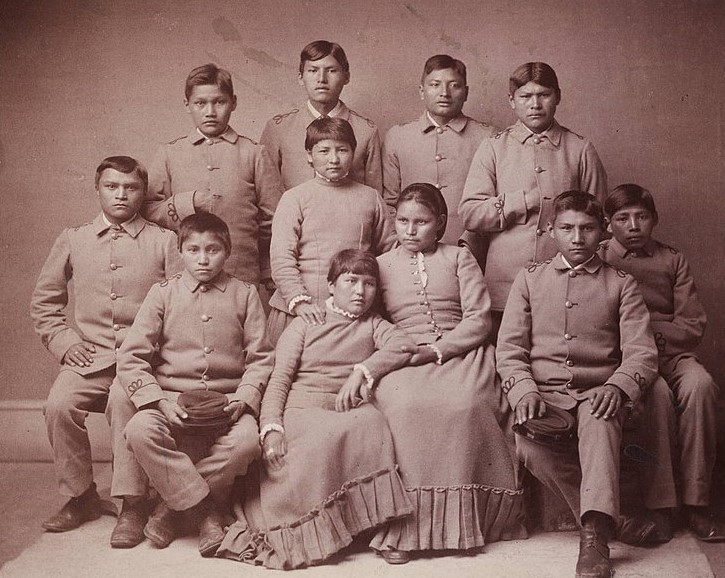
For more information on the erasure of Indigenous history, https://origins.osu.edu/article/erasing-indigenous-history-then-and-now
For Indigenous peoples, this silence can be seen as part of a broader erasure of history. In Whiskey Tender, as in many works of Indigenous literature, sharing personal histories becomes a way to resist this erasure. It is an act of cultural survival. The memoir becomes more than just a personal narrative—it is an act of reclaiming the past and reshaping the future.
Reading Autobiography Now emphasizes the malleability of memory—how the process of remembering is never fixed but always subject to the larger historical forces at play. In both Whiskey Tender and Reading Autobiography Now, autobiography becomes a tool for challenging dominant narratives and reimagining the past. Life writing allows individuals to reclaim their own stories, especially when mainstream media and history have marginalized or silenced those stories.
What makes Whiskey Tender particularly compelling in the study of autobiography is its portrayal of the relational dynamics that shape Taffa’s identity. The book explores how the father’s teachings, the mother’s silence, and the complexities of Taffa’s evolving identity come together to form a multifaceted understanding of self. This relational construction of identity—shaped by family, history, and culture—echoes the theoretical ideas of relationality explored in Reading Autobiography Now, where identity is viewed as fluid and ever-changing, shaped by the people around us and the stories they tell.
For Indigenous peoples, identity is not just shaped by immediate family but also by the collective memory of a culture, a history that has often been suppressed or erased by dominant societal forces. Whiskey Tender captures this struggle with striking clarity, showing how the protagonist grapples with her heritage, her family’s legacy, and her place in a contemporary world that continues to marginalize Indigenous voices.
Ultimately, both Whiskey Tender and Reading Autobiography Now highlight the importance of remembering—not just for ourselves, but for the survival and flourishing of our communities. As Taffa’s journey shows, autobiographical writing is not simply about telling a life story but about understanding the past, confronting the silences, and shaping a future where stories are no longer erased or forgotten. In this sense, autobiography becomes a powerful tool for personal and collective resistance, a means of reclaiming history and ensuring that the stories of Indigenous peoples are heard and remembered.
By engaging with works like Whiskey Tender and Reading Autobiography Now, we are reminded that autobiography is not just an individual act but a political one, deeply tied to the larger forces of history, memory, and identity. Through these narratives, we are invited to reflect on the stories we tell about ourselves, to question the histories that have been silenced, and to create space for the long, unheard voices.

You write that “at the heart of autobiography is a simple question: What do we remember, and why do we choose to tell the stories we do?” As your post makes clear, another key question involves asking which stories and experiences are sanctioned by the broader culture. In Taffa’s case, she chooses to tell her story as a way of pushing back against this silence, the sense in which her own experience–and the experience of her family and her people–have been obscured in contemporary culture.
I appreciate the broad array of concepts that you draw in here from Reading Autobiography Now, but in some ways I think the post could have dwelled longer on key moments from the memoir–not just on her early, self-reflective comments on family and history and victimhood and vulnerability, but on some of the ways that the stories she tells unpacks this tension. One of my favorite aspects of this memoir is how these broader themes are so carefully rendered in individual scenes and in the way one episode attaches to the next.
Thanks for sharing this reflection!